We may earn revenue from the products available on this page and participate in affiliate programs. Whether you’re laying sod, seeding grass, or just trying to smooth out the look of an uneven lawn, a lawn roller can help. With no engine, no power source, and almost nothing to break, this simple, low-maintenance tool can make an immediate visual impact on your lawn.
Why a lawn roller matters
There’s a belief that rolling can compact soil, so it should be used cautiously. You don’t want to roll every day or on very wet soil, as excessive compaction reduces aeration. The best times to use a lawn roller are during establishing a new lawn or after laying seed or overseeding. Rolling helps press seeds into the ground, eliminates minor bumps, and promotes uniform ground contact for germination.
Top pick: Brinly PRC-242BH
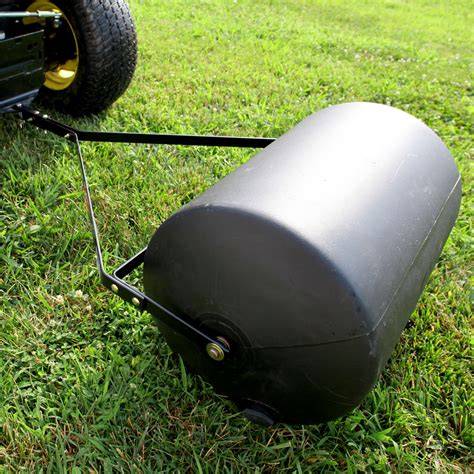
Brinly’s PRC-242BH stood out to us as the best roller on the market thanks to its combination of versatility, ease of use, and cost value. A feature we really like is that it features an extra-large opening, which lets you fill it more quickly than other models. As for its build quality, the PRC-242BH features a dent- and rust-resistant polyethylene construction. This means not only is it low maintenance, but it’s also lightweight, making it easy to handle when empty. Overall, the Brinly PRC-242BH is simple to set up and use, easy to maneuver by hand or with a lawn tractor, and versatile enough for most people’s needs. When you’re done using it, it can be emptied quickly (thanks to the extra-large opening we mentioned) and stored without the awkward heft of lawn rollers with drums and frames made entirely of steel. We think this is an especially good option for new homeowners looking to give a uniform shape to a neglected lawn.
Other notable options
- Einhell lawn roller - A budget-friendly option with a coated metal roller, decent size (32cm diameter, 57cm wide), and a 46-litre capacity. It allows weight adjustment via adding sand or water and has a side opening for easy filling, though the handle can feel short for taller users. This roller suits small to medium gardens and won’t flatten large lumps easily.
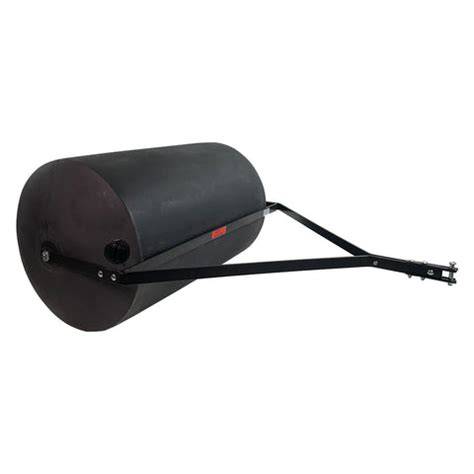
- Brinly PRC-24BH push/tow poly roller - The top pick’s closest competitor in durability and ease of use, constructed from high-quality polyethylene to resist dents and rust. It’s easy to push, and for larger gardens you can tow it with a tractor or ATV, filling to maximum weight for enhanced flattening benefits. It’s noted for solid build quality and straightforward assembly.
- AL-KO Hobby lawn roller - Priced higher, this model emphasizes build quality and robustness. With a 44cm diameter and 50cm long drum, it handles most average UK gardens well. When filled with sand, it provides substantial weight, though some users report minor quality-control inconsistencies with certain batches.
- Coopers of Stortford lawn roller - A budget-friendly option with a 42cm drum diameter and a 50cm length. It features foldable handles and a tool-free drain plug for filling and draining, but you may encounter minor leakage from the fill plug and occasional scraper alignment challenges.
- Greenkey lawn roller - The most affordable option in the lineup, with a 30cm drum diameter and 42cm width. It’s best for small gardens or light use after winter to smooth bumps and assist seed or sod placement. Weight is achieved by filling with dry material or water, offering a practical entry point for budget-conscious buyers.
- Other notes - Some models use metal drums, while others rely on plastic or composite materials. A scraper bar helps prevent dirt from sticking to the roller and returning to your lawn, though some designs may snag depending on material proximity and fill contents. The balance between weight, maneuverability, and fill material (water vs. sand) will affect handling and performance.
Practical tips for using a lawn roller effectively
- Fill the roller with the right amount of weight to balance effectiveness and ease of use. Sand adds density, but it can hinder emptying and increase maintenance needs. Water is easier to manage for removing and storing but may provide less consistent weight if the water level changes.
- Roll on established ground with moderate moisture rather than extremely wet soil to avoid excessive compaction and poor aeration.
- Use the roller in stages: after initial level adjustments, reseed or lay sod, then roll again to ensure good ground contact and seed-to-soil contact.
- For large areas or special applications (like artificial turf), consider a model that supports towing with a tractor or ATV for efficiency.
- Incorporate lawn sand to fill low spots after initial rolling if needed, then roll again to settle the material and achieve a uniform surface.
WILL A BRINLY LAWN ROLLER LEVEL YOUR BUMPY LAWN? (And Compact Your Soil?)
Table: quick comparison of popular models
| Model | Drum diameter | Drum length | Fill options | Key benefit |
|---|---|---|---|---|
| Brinly PRC-242BH | Diameter varies by model | Long drum | Water or sand | Durable, rust-resistant, easy to fill |
| Einhell | 32 cm | 57 cm | Water or sand | Budget-friendly, side fill |
| AL-KO Hobby | 44 cm | 50 cm | Water or sand | Premium build quality |
| Coopers of Stortford | 42 cm | 50 cm | Water or sand | Good value, foldable handles |
| Greenkey | 30 cm | 42 cm | Water or sand | Very affordable, compact |
The best lawn rollers are excellent for getting the ground flat and uniform before laying down seed, and also afterwards to get rid of any air that may be trapped. Describing them as heavy, durable, and capable of flattening lawns easily, many gardeners find value in a tool that is simple, low-maintenance, and effective for leveling. There’s no one-size-fits-all answer, but the Brinly PRC-242BH often stands out for its combination of durability, ease of use, and cost efficiency, making it a strong choice for a wide range of users from new homeowners to seasoned landscapers.