Marshmallow isn’t just a squishy confectionary. It also refers to a type of medicinal plant that’s been used for centuries. Marshmallow root (Althaea officinalis) is the brown, fibrous husk of the marshmallow plant that’s been used for centuries as an herbal remedy. The marshmallow plant is native to Europe, North Africa, and Western Asia, and its medicinal use dates back to the Ancient Egyptians. If the name sounds familiar, that’s because marshmallow root is used in traditional recipes for marshmallow candies.
Many of the health benefits of marshmallow root can be attributed to its antioxidant and anti-inflammatory properties as a demulcent herb, which means it forms a protective layer over the mucous membranes. “The roots of the marshmallow plant contain significant mucilage, which is slimy and thick,” explains Jenna Volpe, RDN, LD, a registered dietitian practicing in Austin, Texas. While the health benefits of marshmallow root are mainly associated with respiratory and gut health, there are more medicinal uses of marshmallow root to know.
Topical and mucosal soothing effects
1. Mucous membranes span from your head to your torso-and marshmallow root can help soothe them. The soft tissues that line some of your organs and cavities, such as the mouth and digestive tract, are prone to dryness and irritation. The mucilage coats and protects these linings, providing comfort and support.
2. The next time you’re sick or have bronchitis, you might want to reach for cough syrups and lozenges that contain marshmallow root. Though much of the research consists of animal studies, marshmallow root is proven to treat dry coughs, says Inna Melamed, Pharm.D., a functional medical practitioner in Manalapan, New Jersey. “Marshmallow root is a mucilaginous herb,” Dr. Melamed explains.
3. Since it coats the mucous membranes, marshmallow root may have gut health benefits, too, Volpe says. Specifically, it’s known for protecting against stomach ulcers, as evidenced by some animal studies. “Researchers have found that mucilage and flavonoids from marshmallow root may form a protective layer over the gastric mucosa, protecting against stomach ulceration,” Dr. Melamed says.
Skin and inflammation
4. If you’ve ever come across marshmallow root salves, ointments, balms, or creams, there’s a good reason. According to a clinical trial, a topical cream containing 1% marshmallow root was found to be more effective than 1% hydrocortisone cream in the treatment of atopic dermatitis (aka eczema) in children. Given its anti-inflammatory properties, it’s no surprise that marshmallow root may reduce inflammation and irritation in other inflammatory skin diseases.
5. Leaky gut syndrome isn’t formally recognized as a medical diagnosis, but it’s associated with gas, bloating, and indigestion, according to the Cleveland Clinic. The mucous lining of the intestines is semi-permeable, and some people’s linings let through more than they’re supposed to, causing uncomfortable gastrointestinal symptoms. The mucilage helps support this barrier, contributing to overall gut comfort.
Digestive and wound healing potential
6. Antibiotic ointments are the go-to treatments to prevent wounds from becoming infected, but antibiotic resistance is a growing problem worldwide. Researchers are beginning to explore the possible wound-healing benefits of herbal medicines like marshmallow root, and the outlook is promising.
7. “The verdict of one study is that marshmallow root’s antioxidants made it significantly more effective than astragalus root at protecting cells from oxidative damage induced by UVA rays,” Volpe explains. Reducing oxidative stress from ultraviolet light could reduce the risk for the most common type of cancer in the United States: skin cancer. Researchers have begun looking into the potential anticancer health benefits of marshmallow root.
8. Everyone has an ecosystem of microbes that live in their gut, known as the gut microbiome. Some microbes are helpful, such as probiotics, while others are harmful. Probiotics are known for supporting healthy gut function, and marshmallow root may be a tool to provide a food source known as prebiotics to probiotics in the gut, Volpe says. “As a demulcent herb, marshmallow root is naturally rich in polysaccharide constituents,” she explains.
Antibacterial and safety considerations
9. Marshmallow root has antibacterial properties, which may help fight infections throughout the body. Namely, marshmallow root has been shown to inhibit bacteria in the urinary tract-keeping the bladder clean, soothing bladder inflammation, and stopping urinary bleeding. Whether taken orally or applied topically, it’s important to be mindful of any side effects associated with using supplements, including marshmallow root. However, the use of marshmallow root is generally considered safe and not associated with many side effects, Dr. Volpe notes. Many side effects involve the digestive tract. Since much of the scientific research on marshmallow root involves animal studies, there aren’t clear guidelines surrounding safety of marshmallow root supplements and products.
There are minor interactions with antiplatelet drugs, which could increase the risk of bleeding, Dr. Melamed explains. To reduce any interactions between marshmallow root and other medications, spacing them out is advised. “People should take marshmallow root at least an hour apart from any and all medications,” she says.
Forms, preparation, and practical use
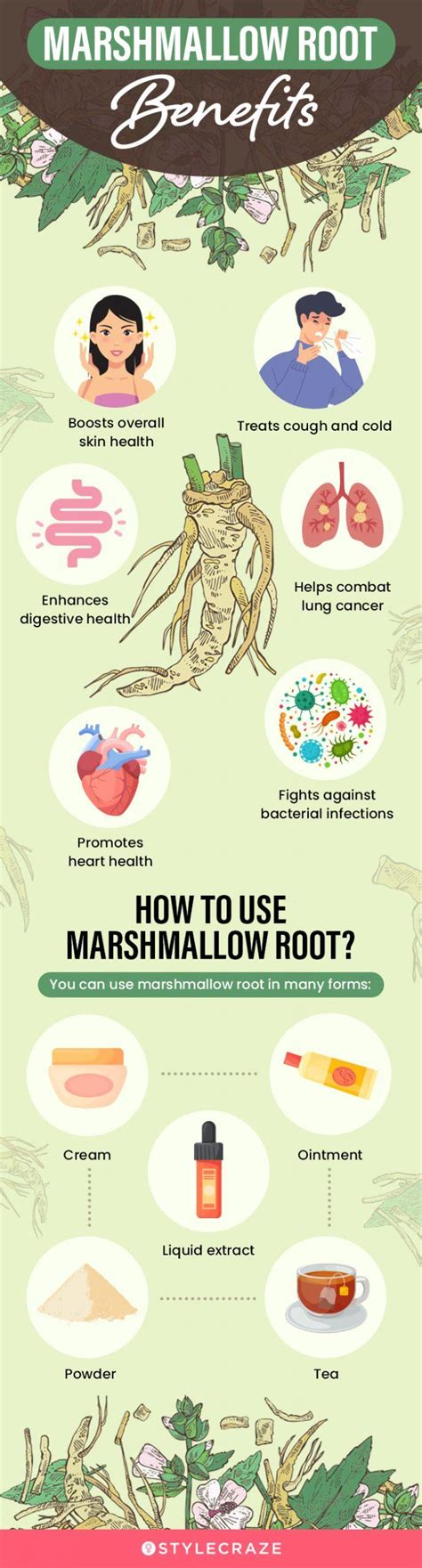
Marshmallow root is a versatile and powerful supplement. You can drink it in tea, take oral capsules, or apply it topically. Ultimately, it’s still a supplement and should be treated as such.
- Tea: Use dried marshmallow root for loose-leaf tea by pouring boiling water over the dried root, steeping 5-10 minutes, then straining. Ready-made marshmallow root tea bags are another option.
- Powder: Marshmallow powder typically includes different plant parts; mix with water or juice to create a soothing drink, or combine with water to form a viscous liquid for throat comfort. Store refrigerated up to 2 weeks.
- Skin salve: Create a salve by combining cooled marshmallow tea or liquid extract with coconut oil for direct skin application.
Dosage guidance varies by product. It is best to follow packaging directions and consult a healthcare professional if pregnant, nursing, or taking medications. If using topically, perform a patch test first to check for reactions.
Historical and broader context
Marshmallow root has been studied for centuries for its ability to support a healthy respiratory system. The plant’s history spans ancient Greek, Egyptian, and European traditional medicine, where it was used for digestion, coughs, and anti-inflammatory properties. The mucilage content, polysaccharides, flavonoids, tannins, antioxidants, and the gelatinous mucilage are central to its effects-coating mucosal linings throughout the body, including the GI tract, respiratory tract, and urinary system. The name “marshmallow” in confections comes from the root’s mucilage used in early candy-making; modern candies typically do not contain the herb.
In the context of Western botanical medicine, marshmallow is often considered for gut repair, dry coughs, skin irritation, and wound healing, while traditional and modern research continues to explore its full potential and safety profile. Though results are promising in animal and lab studies, more rigorous human trials are needed to draw definitive conclusions.
Herbalism 101: Marshmallow Root with The Alchemist's Kitchen
Some people can be allergic to marshmallow root. If you apply marshmallow root topically, it may cause skin irritation in rare cases. Safety for pregnant or nursing individuals remains unclear, so professional medical advice is recommended before use. Marshmallow root can be consumed in multiple formats-tea, capsules, tinctures, or topical preparations-and should be used with consideration to potential drug interactions and individual health status.
| Benefit Area | Evidence Type | |
|---|---|---|
| Dry cough relief | Clinical trials and animal studies | Demulcent effect; mucilage coats throat |
| Skin inflammation | Clinical trial; older reviews | Topical 1% marshmallow can outperform hydrocortisone in some cases |
| Ulcer protection | Animal studies | Potential gastric mucosa protection via mucilage/flavonoids |
| Antioxidant activity | Laboratory studies | Potential protection from UVA-induced damage |
| Wound healing | Animal studies | Topical marshmallow extracts may speed healing and reduce infection risk |