You can support plant biodiversity as well as pollinators and songbirds by planting locally native plants in your shade garden. Recent research suggests that if biodiversity is your motive, you’d do well to use at least 80% natives by cover, rather than just planting a few.
One aspect of native gardening that is unique to shade gardens is the opportunity to mimic the natural structure of a forest. The layering of canopy, understory, shrub, and herbaceous species, underlain by leaf litter, provides habitat for the insects and birds that call the Eastern Deciduous Forest home. Research shows that this helps to support insect and songbird biodiversity.
If you live near a park that controls deer overpopulation and removes invasive plants, go there to see what kind of native plants occur naturally in the woods near you. Pay particular attention to what grows on hilltops vs. what grows in the valleys. You’ll probably notice that there is a lot more vegetation in the valley. Many trees, shrubs, and perennials are adapted to higher moisture levels. If you purchase and plant these species in dry shade in your home landscape, you may need to irrigate to get the same lush appearance you saw in nature. You might prefer to plant species you saw on the hilltop instead, to have a lower maintenance landscape, and settle for a look that’s a little less lush.
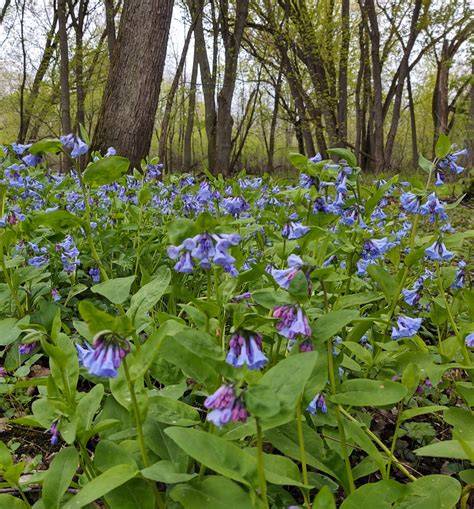
In ecology there are exceptions to almost every rule and this is one. The Virginia bluebells, shown above, are naturally found in floodplains, but are quite happy in the dry shade garden.
Selecting native shade plants
As with any type of garden you must take growing conditions (moisture, soil texture, pH, deer) into consideration. With shade gardens, you also need to ask yourself what type of shade your garden has. Is it the full shade cast by the north side of a building? Then look for native plants that can tolerate deep shade. Is some light being filtered through the trees? Or is it just shady part of the day and sunny the rest?
In the summer, morning shade and afternoon sun can be hard on woodland plants, consider tough species that are native to the forest edge rather than the interior. Another aspect of native gardening that is unique to shade gardens is the spring ephemeral. These woodland wildflowers have evolved to emerge before trees leaf out, allowing them to get in a few weeks of good sunshine. After the trees leaf out, they are done flowering and they go dormant. Some disappear so completely, you would do well to mark their location so that you don’t accidentally dig them up.
This unique quality offers you, the gardener, the option of double planting with plants that offer more interest later in the season, for example bottlebrush grass or garden phlox. Keep in mind that some species also have soil texture or pH requirements, so be sure to ask your native plant vendor about these.
A few woodland species are mistakenly advertised as native, but are not native anywhere in Maryland. Yellow wood poppy, in addition to being non-native, can be quite aggressive. Allegany pachysandra is native to the cool mountains of the southern Blue Ridge.
Maintaining a native shade garden: leave the leaves
One aspect of gardening under trees is deciding what to do with the thousands of leaves that blanket the ground each fall. You will want to remove leaves covering evergreen plants you’d like to keep. The evergreens photosynthesize during the winter, and a blanket of leaf litter will kill them. This includes lawn, moss, or evergreen natives like Christmas fern and golden groundsel.
Some plants that aren’t considered evergreen do have evergreen basal foliage, and this also needs to be protected. Bottlebrush and cardinal flower are good examples. You will notice that in the woods, mosses and evergreen native plants only grow where leaves don’t accumulate. In your garden, you are the force that keeps leaves from accumulating. Otherwise, native shade gardening can be less work and more gratification if you leave your leaves where they land!
Your woodland plants are well adapted to an undisturbed blanket of leaves and do not need to have them blown, shredded, etc. From fungi to overwintering insects, many woodland species require undisturbed leaf litter. The Xerces Society lists fritillaries, hairstreaks, wooly bears, luna moths, and bumble bees among the many insects that overwinter in fallen foliage. The Maryland Native Plant Society booklet has an excellent plant list, and indicates which plants perform well in shade.
Native shade plant suggestions and notes
Sara Tangren, former Sr. Beebalm/Horsemint/Bergamot (Monarda fistulosa) - One of the best dry shade natives, the clusters of pale purple flowers attract insects and hummingbirds. It’s easy to start from seed, and sprouts up mid-April, and is easy to transplant. It likes a little extra water: the plants growing under my downspouts get huge and lush.
Curly-cup Gumweed (Grindelia squarrosa) - I see this up in the pine forest. The easy-to-germinate seeds come up in early May in quantity and look like prickly lettuce sodon’t weed them by mistake!
Gaillardia / Blanketflower (Gaillardia aristata) - An easy to grow favorite that will tolerate shade. The first blooms appear in mid to late May and it blooms very well August through September.
Golden Banner (Thermopsis divaricarpa) - A big yellow legume that blooms early to mid May, it will spread over time to create a large patch.
Goldenrod, Tall (Stiff) (Oligoneuron rigida) - A tall native goldenrod that’s easy to start from seed, and will reseed itself. It blooms in August and September.
Harebells (Campanula rotundifolia) - A dry shade wildflower, with small purple bell-shaped flowers. The plant grows to about soccer-ball size. Over several years it will grow around rocks, creating a lovely effect.
Penstemon, Blue Mist (Penstemon virens) - Sky blue spires of blooms around mid-May, less than a foot tall. It transplants easily.
Rocky Mountain Columbine (Aquilegia caerulea) - Fairly easy to start from seeds, which sprout in early April. The plants bloom May and June.
Smooth Aster (Aster laevis) - Adult plants can get up to three feet tall and bloom from July through October. It sows easily, and can take over an area aggressively.
Tall Coneflower (Rudbeckia laciniata var. Porter’s Aster (Aster porteri) - A low-growing, shade-loving white aster that blooms in mid-late August. White Prairie Aster (Virgulus ericoides or V. falcatus) - A low-growing hardy little white aster of the prairie, it looks a lot like Porter’s Aster but with short grey-green fuzzy leaves. It is aggressive, even in partial shade, and starts easily from seed.
Wild Blue Flag Iris (Iris missouriensis) - It blooms mid-May and needs a little extra water in spring before it blooms (but can dry out afterwards).
Wild Geranium (Geranium caespitosa) - A low-growing forest plant that greens up in early April, and blooms from early June onwards with pinkish flowers.
Notes on dry shade and regional observation
Lots of native plants grow in dry shade! Even if you don’t live in Colorado’s Front Range, go for an inspirational hike in a wild native forest near you, and see what’s blooming in the shade under the trees. Dave Sutherland is a community naturalist in Boulder, Colorado. He leads free public nature walks on many topics, including wildflowers, and tours of his 28-year old native plant garden.
| Plant | Shade preference | Notes |
|---|---|---|
| Virginia bluebells (Mertensia virginica) | Woodland, floodplain but tolerant of dry shade | Spring ephemeral, happy in dry shade |
| Monarda fistulosa (Beebalm) | Dry shade | Attracts insects and hummingbirds; easy from seed |
| Gaillardia aristata (Blanketflower) | Partial shade | Blooms May and Aug-Sep |
| Iris missouriensis (Wild Blue Flag) | Moist to seasonally wet shade | Needs extra spring water before bloom |
| Geranium caespitosa (Wild Geranium) | Woodland shade | Greens up early April; blooms from June |
How To Identify Spring Ephemeral Wildflowers
From planning your native garden to choosing species based on shade, moisture, and soil, adopting woodland layering, and leaving leaf litter undisturbed, these practices help sustain native insects and songbirds while creating a lower-work, biodiverse landscape.